
Three gentle taps.
A short pause.
And then a child’s voice — soft, uncertain, but horribly familiar:
“Mom… it’s me.”
Sometimes I still wonder how my legs managed to move at all. It was a Thursday night, very late, the kind of late when every sound feels exaggerated. I was putting dishes away just to keep my mind busy, when the silence shattered.
I froze.
For a moment my brain simply refused to process what I had heard.
Two years of hospitals, paperwork, condolences, flowers, graves, photos stuffed into drawers — all of it slammed into me as I stood there, hands dripping with soapy water.
A second knock came. This time a little more urgent.
“Mom? Can you please open?”
A cold rush crawled down my spine. I’d had moments of grief-induced confusion before — phantom footsteps in the hall, glimpses of a child’s silhouette in corner vision, laughter that turned out to be wind — but this was not like those.
This voice came from the other side of the door. Too close. Too real.
I wiped my hands blindly and reached for the handle. My fingers were trembling so hard I almost missed it.
The door opened.
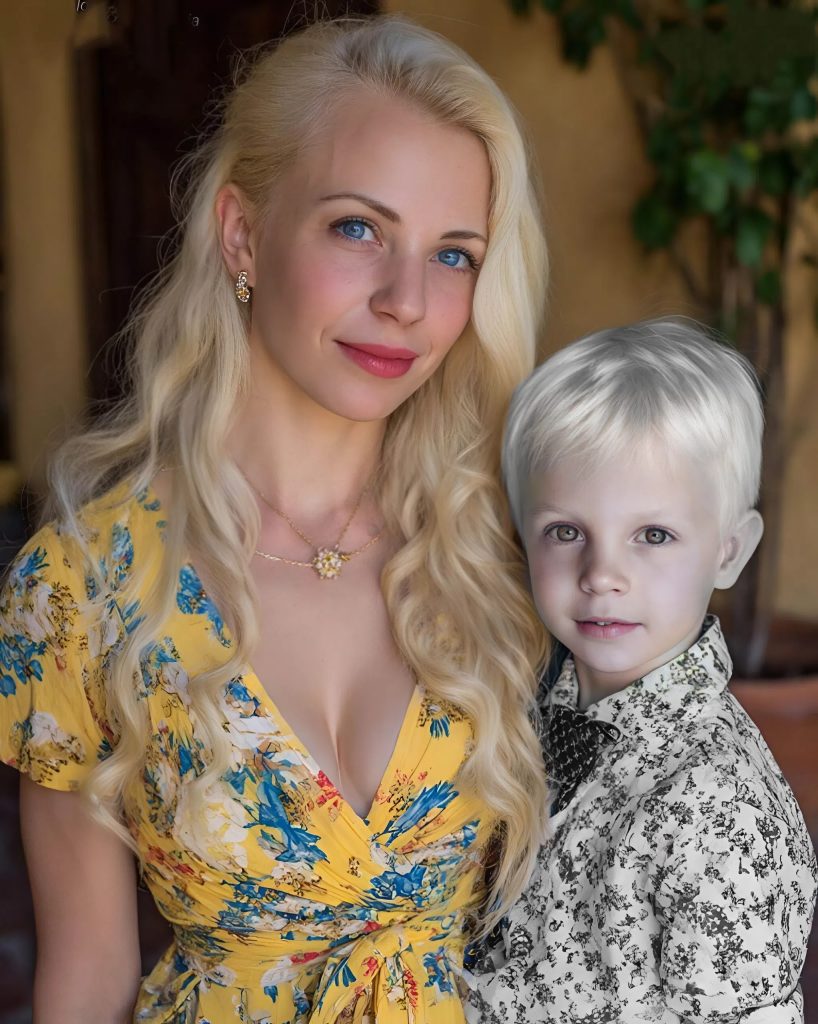
Cold night air swept inside, and there, on the threshold, stood a small boy. Thin, pale, dark hair falling over his forehead. He looked up at me with deep, searching eyes — eyes that once begged for bedtime stories and one more cookie.
“Mom,” he whispered. As if that single word explained everything.
My knees weakened.
My mind screamed impossible, but my heart recognized him instantly.
My son had died. I had held his hand as the machines went quiet. I had kissed his forehead at the funeral home. I had stood at the burial, numb, as the coffin was lowered into the ground.
And yet he was here.
“Who are you?” I asked, though the words tasted like a lie.
A tiny, sorrowful smile touched his lips.
“It’s me. I found the way back.”
He reached out and took my hand. His skin was warm — not freezing, not ethereal, not dream-like. Warm like any living child. The warmth almost broke me.
I pulled him inside and shut the door quickly, as though someone might steal him away if I hesitated.
Under the kitchen light, he sat at the table. The same chair he once used for drawing messy suns and stick figures. But something about him was different. His eyes were the same color, yes, but there was a depth in them that no five-year-old should have.
I sat down opposite him, trying to steady my breathing.
“Where were you?” I finally managed.
He shrugged lightly.
“Not here,” he said. “But I knew how to come home.”
My heart twisted painfully. I wanted to ask where “not here” was — heaven, hell, somewhere else? — but something inside warned me not to push too hard.
So instead I reached for normalcy:
“Are you hungry?”
I set fruit, yogurt, crackers in front of him. He studied the food for a moment before quietly pushing it away.
“I don’t eat like that anymore,” he said.
A cold discomfort settled in my stomach.
“Then what do you need?”
He looked up. His eyes were too old. Too aware.
“I came to tell you something. But you must not cry.”
“I can’t promise that,” I whispered.
He nodded, as if he expected that answer from the start.
“It wasn’t your fault.”
The words hit like a hammer.
For two years, guilt had lived inside me like a parasite — whispering that I should have noticed sooner, should have done more, should have forced doctors to listen, should have saved him somehow.
“How do you know?” my voice cracked.
He rested his hand over his chest.
“I remember,” he said. “And they told me.”
“They?” I repeated. “Who are they?”
He glanced toward the front door.
“The ones who guard the doors,” he said simply.
A strange chill spread through the room. It wasn’t just the temperature — it was the air. The atmosphere felt thinner, like something unseen was pressing against the walls.
“I have to go back soon,” he continued. “They’re already coming.”
“No.”
The word burst out of me before I could stop it. “You just got here. I’m not losing you again.”
He slid out of my grasp with gentle, heartbreaking ease.
“I was never really gone,” he said. “You just couldn’t see me. You’ll see me again when it’s your turn to walk.”
“To walk where?” I whispered.
“Through the doors.”
Before I could ask anything more, someone — or something — knocked from the outside.
Not a child’s knock. Not a neighbor’s knock. A deep, heavy knock that rattled the lock and made my blood turn to ice.
My son looked toward the noise, then back at me, with a small bittersweet smile.
“I love you, Mom.”
“I love you,” I choked, tears streaming before I could stop them.
He opened the door.
There was no hallway, no staircase, no light. Only a thick, pulsing darkness that didn’t behave like ordinary night. It seemed alive.
He stepped into it.
The door swung shut behind him.
Silence swallowed the house.